Bicycle Mobility

At the European level
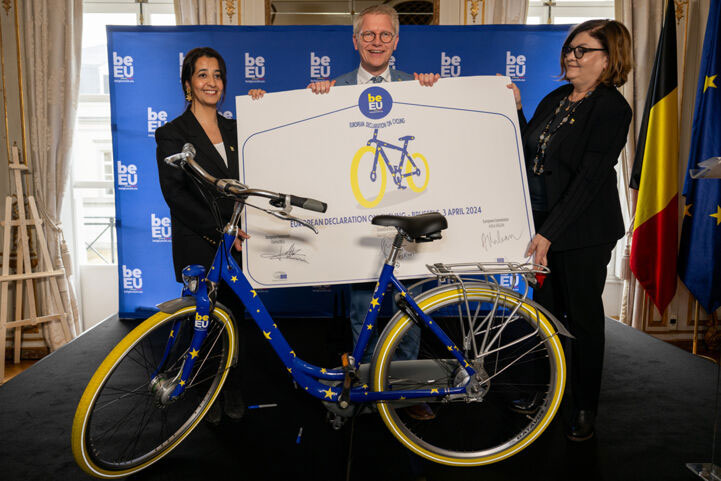
On April 3, 2024, the European Council, the Commission and the Parliament signed the European Declaration on Cycling, thus culminating a process initiated in 2022 and officially adopting the first inter-institutional policy on cycling at the European level.
The Declaration recognizes cycling as one of the most sustainable, accessible, inclusive, economical and healthy means of transport and leisure, highlighting its importance for European society and economy.
At the state level
On June 8, 2021, the Council of Ministers approved the State Bicycle Strategy (EEB), a document prepared by the Ministry of Transport and Sustainable Mobility, based on the work carried out by the Directorate General of Traffic (DGT), and with a time horizon until 2026.
The purpose of the Strategy is to promote cycling in all areas, involving a large number of actors, both from public administrations, the business sector and civil society. The EB is understood as one of the fundamental actions within the Safe, Sustainable and Connected Mobility Strategy 2030, being included within the axis of action 1, “Mobility for all”.
For the period 2026-2031 a new State Bicycle Strategy is being worked on.
At the regional level
The Aragonese Bicycle Strategy. Approved at the end of 2020, it pursues the orderly and effective promotion of the bicycle as a tool for sustainable, daily and safe mobility, in leisure, tourism and sport, but also in health, territorial development, respect for the environment, job creation, innovation or education.
The Strategy was approved by the Institutional Bicycle Board and was developed after a participatory process with representatives of social and business entities and administrations.
The Transpirenaica Foundation provides technical support and advice to the Department of Public Works, Housing, Logistics and Territorial Cohesion – DG Transport – in the field of Cycling Mobility.
Specifically by means of:
Analysis and planning of the necessary actions for the promotion of bicycles and the promotion of transversal policies that favor sustainable mobility;
Technical support in the search for grants and funding to help develop and implement cycling strategies and related investments;
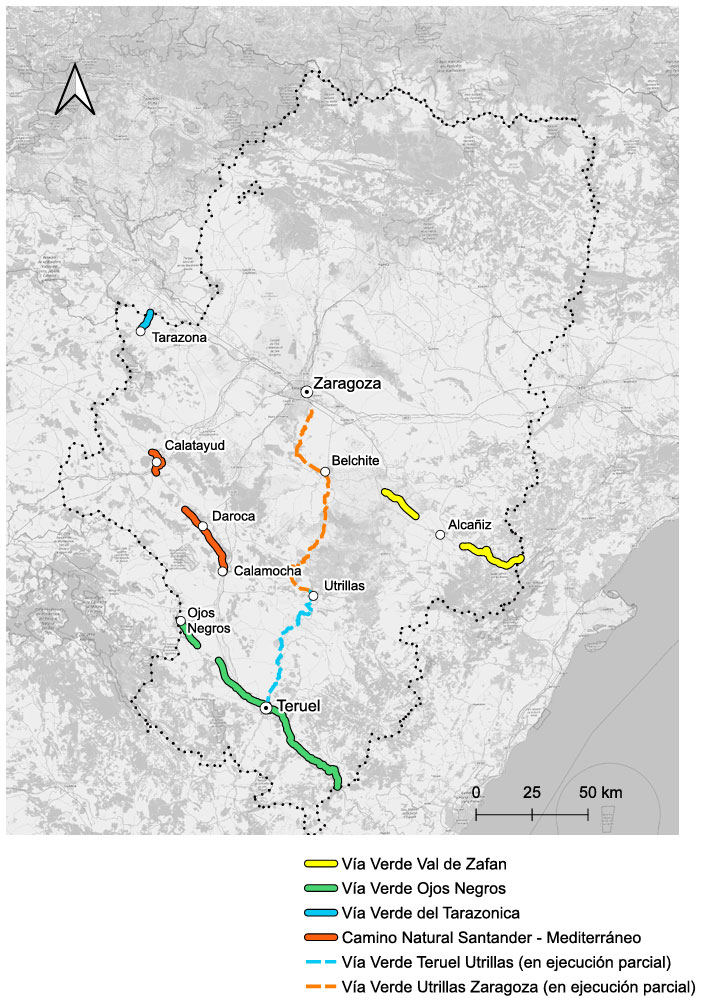
Technical assistance in the Ojos Negros and Val de Zafán Greenway.